
Research-Focused Blog Posts
Our blog posts offer concise, expert commentary on the latest developments in VHH technology. From new research findings to industry updates and practical tips, each article is written to inform and support your scientific work.
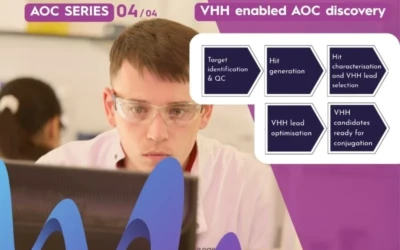
Accelerating VHH-enabled Antibody-Oligonucleotide Conjugates Discovery
AOC targeting ligands need to combine specificity, internalisation, developability and conjugation compatibility. Explore how synthetic VHH discovery platforms can address these requirements earlier in development.
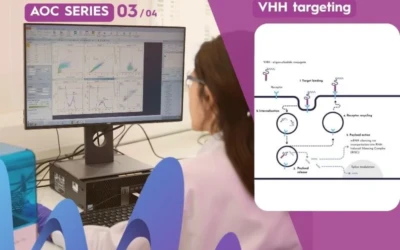
Why VHHs Are Attractive Targeting Ligands for Antibody-Oligonucleotide Conjugates
Effective AOCs depend on more than the oligonucleotide payload. This article examines the targeting and intracellular delivery process and why VHH antibodies offer useful properties for AOC design. Read more
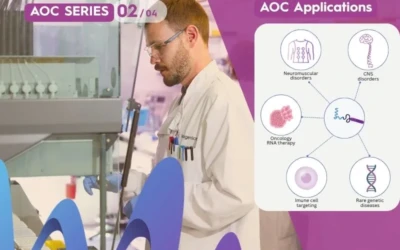
How Are Antibody-Oligonucleotide Conjugates Being Applied?
AOCs are being explored across muscle, rare disease, CNS and immuno-oncology programmes. This article reviews representative programmes and compares AOCs with LNPs, viral vectors, GalNAc conjugates and local delivery. Read more
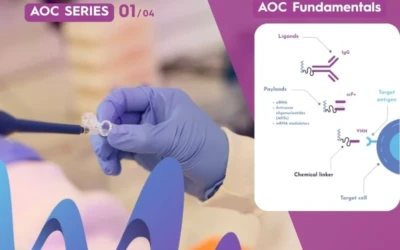
Why Antibody–Oligonucleotide Conjugates Are Gaining Momentum
AOCs combine antibody-based targeting with therapeutic oligonucleotides to support receptor-mediated delivery and intracellular activity. This overview explains how the modality works, its core components and how it differs from mAbs and ADCs. Read more

Lipid Nanoparticles for Drug Delivery: Precision Targeting Beyond the Liver — and the Role of VHHs
Lipid nanoparticles are central to nucleic acid delivery but remain constrained by liver tropism and limited cell specificity. This article examines how VHH antibodies enable receptor-mediated targeting, supporting extrahepatic delivery while maintaining manufacturability and scalability. Read more

VHH and the blood–brain barrier challenge
The blood–brain barrier remains a critical bottleneck in CNS drug delivery, excluding nearly all biologics. VHH antibodies offer a practical route forward, combining small size, stability, and engineering flexibility to enable receptor-mediated transport into the brain. This article examines transport mechanisms, emerging applications, and how synthetic VHH libraries support the development of brain-penetrant biologics. Read more

Machine Learning and Artificial Intelligence in Antibody Discovery: Breakthroughs, Blind Spots, and the Road Ahead
AI won’t eliminate antibody discovery wet-lab workflows. However, high-throughput clean empirical discovery plus ML-driven iterations have the potential to make discovery more predictable, faster to converge, and easier to scale. Read more

How VHHs Can Redefine the Next Generation of ADCs
Antibody–drug conjugates (ADCs) remain one of the most promising modalities in oncology, but the next generation demands smarter, more adaptable scaffolds. Single-domain antibodies bring precisely that: offering high affinity and stability in a compact, engineerable scaffold. By merging these two platforms, we get an antibody framework that can address long-standing bottlenecks in the industry. Read more

The Proteins We Work With: A Guide to Supported Antigen Materials
A technical overview of how in vitro discovery platforms support VHH antibody and peptide discovery across challenging protein classes, from soluble enzymes to membrane proteins, toxic antigens and complex multimeric targets, using tailored antigen presentation strategies. Read more

Building Smarter Therapeutics with VHH Bolt-Ons
VHH antibodies provide modular, high-performance components that can enhance biologics across multiple modalities. From albumin-binding half-life extension to bi-/multi-specific engineering and intracellular TPD, VHH bolt-ons enable more flexible, efficient and targeted therapeutic design. This article examines the key applications, design considerations e case studies that illustrate how VHH domains support next-generation engineered biologics. Read more