
VHH-enabled antibody-oligonucleotide conjugates for targeted therapeutic delivery
Receptor-mediated targeted delivery of therapeutic oligonucleotides beyond liver-focused systems.
Scientific & Therapeutic Context
What are Antibody-oligonucleotide conjugates?
Antibody-oligonucleotide conjugates (AOCs) combine a targeting ligand—such as a full-length antibody, antibody fragment, or single-domain VHH antibody—with a therapeutic oligonucleotide payload. Depending on its design, the oligonucleotide can support diverse biological mechanisms, from gene silencing and splice modulation to intracellular immune activation. A linker chemistry connects the targeting and therapeutic components, creating a conjugate designed for receptor-mediated delivery to specific cell populations.
Delivery landscape for RNA therapeutics
Current Delivery Approaches
Established delivery technologies such as GalNAc conjugates and lipid nanoparticles (LNPs) have enabled significant advances in oligonucleotide therapeutics. GalNAc conjugates provide highly effective targeted delivery to hepatocytes, while many systemically administered LNPs show preferential distribution to the liver. However, achieving efficient and selective delivery to many extrahepatic tissues and specific cell populations remains a major challenge.
Where AOCs Fit
AOCs represent an emerging strategy for extending targeted oligonucleotide delivery to a broader range of tissues and cell types. By combining therapeutic oligonucleotides with antibody-based targeting ligands, AOCs can exploit receptor-mediated uptake to direct diverse oligonucleotide payloads to defined cell populations. This creates a modular platform in which both the targeting component and payload can be tailored to the therapeutic objective.
Why VHH antibodies for AOC design?
The choice of targeting ligand is a critical consideration in antibody-oligonucleotide conjugate design. VHH antibodies offer a compact, stable and highly engineerable format, with the potential to access epitopes that may be challenging for larger antibody formats while accommodating flexible conjugation and molecular engineering strategies. These properties make VHHs attractive targeting scaffolds for the development of next-generation AOCs.
Their engineering flexibility also creates opportunities to develop VHHs against receptors associated with tissue-specific uptake or transport. For example, targeting receptors expressed at the blood–brain barrier (BBB) could provide a route towards VHH-enabled oligonucleotide delivery to the central nervous system (CNS), although productive CNS delivery depends on the properties of both the receptor and the conjugate.

Why partner with Isogenica?
Developing effective antibody-oligonucleotide conjugates starts with identifying targeting ligands with the right binding, internalisation, engineering and developability characteristics. Isogenica combines large synthetic VHH libraries with in vitro display technologies to discover and optimise VHHs for targeted therapeutic applications. The inherent engineering flexibility of VHHs also supports the incorporation of defined conjugation sites, such as C-terminal cysteines.
Overall, our platform enables efficient identification and development of VHH candidates suitable for downstream next-generation AOC strategies.

Isogenica’s
RESOURCES
Explore related pages
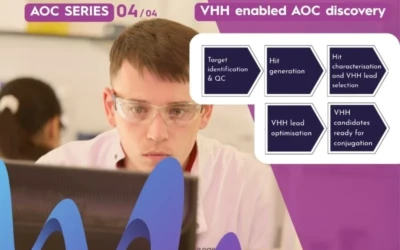
Accelerating VHH-enabled AOC discovery
AOC targeting ligands need to combine specificity, internalisation, developability and conjugation compatibility. Explore how synthetic VHH discovery platforms can address these requirements earlier in development.
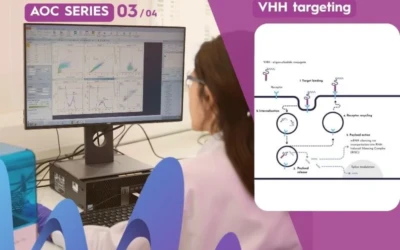
Why VHHs Are Attractive Targeting Ligands for AOCs
Effective AOCs depend on more than the oligonucleotide payload. This article examines the targeting and intracellular delivery process and why VHH antibodies offer useful properties for AOC design. Read more
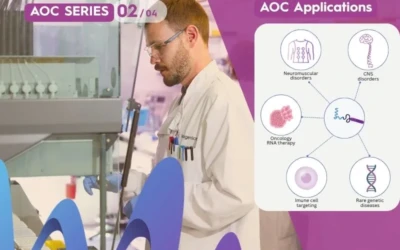
How are AOCs being applied?
AOCs are being explored across muscle, rare disease, CNS and immuno-oncology programmes. This article reviews representative programmes and compares AOCs with LNPs, viral vectors, GalNAc conjugates and local delivery. Read more
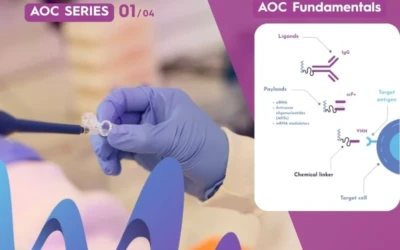
Why Antibody–Oligonucleotide Conjugates Are Gaining Momentum
AOCs combine antibody-based targeting with therapeutic oligonucleotides to support receptor-mediated delivery and intracellular activity. This overview explains how the modality works, its core components and how it differs from mAbs and ADCs. Read more
Curious how VHHs could accelerate your therapeutic program? Talk to our scientists.
Explore the science behind our antibody discovery platforms
White Paper “Data-Driven Validation of Synthetic VHHs”
 This white paper provides a data-driven validation of Isogenica’s synthetic VHH libraries, powered by Colibra® technology. Designed for biotech and pharmaceutical scientists, it demonstrates how these libraries enhance and accelerate drug discovery, particularly in oncology and immunotherapy. Download
 Extending half-lives of VHH antibodies
 Because VHHs are small, they can be cleared quickly from the bloodstream. This can be a useful feature for some applications, but often a longer plasma half-life is desirable. DOWNLOAD
Advantages of VHH in bi-specifics
 To learn more about the application of VHHs in bi-specifics, we have condensed our expertise into a downloadable Application Note. DOWNLOAD
Optimizing CAR-T and T-cell antibody engagers: a role for VHH single domain antibodies
 This whitepaper summarises the clinical and research landscape for CAR-T and T-cell engaging antibody therapies and show how single domain VHH antibodies can be applied to optimise the next generation of these important new therapeutic modalities. DOWNLOAD
Isogenica’s PD-L1 VHH as Functional Antagonists
 PD-1 is an immune checkpoint protein expressed on the surface of multiple types of immune cells, including antigen-stimulated T-cells and tumour specific T-cells1. Interaction between PD-1 and its ligands (PD-L1 or PD-L2), is responsible for the regulation of T-cell activation, apoptosis, proliferation and cytokine production. DOWNLOAD
Anti-LRP5/6 VHH inhibits WNT pathway and prevents tumour growth
 VHH are the variable domain of heavy chain only antibodies. They are small in size (~15 kD) and biophysically robust. With tunable half-lives, these antibodies are ideal for targeting inaccessible epitopes, achieving enhanced tissue penetration, multi-target binding and formatting for payload delivery… DOWNLOAD